Senate Bill S3781 Brings Dignity to New York Children Entering Foster Care
For far too long, many children entering the foster care system in New York State have entered the foster care system carrying all of their belongings in black plastic trash bags. This small detail sent a big message about children’s worth.
It told them they didn’t matter.
With hard work, advocates have been fighting for reform in the foster care process, culminating in a bill that would finally bring about change. Senate Bill S3781 has been signed into law ensuring that children entering foster care are treated with dignity from the very beginning. Starting 120 days after the bill was signed in December 2025, every child entering foster care in New York State will receive proper luggage or a duffle bag—not a trash bag.
This change is a part of a larger effort to improve how the foster care system responds when placing children into new homes and paying close, compassionate attention to their unique needs, emotional well-being, and sense of safety.
What Senate Bill S378 Does
In short, Senate Bill S3781 amends the New York State Social Services Law by adding Section 398-F, creating clear regulations that require the Office of Children and Family Services (OCFS) to provide luggage to children in foster care.
The law establishes statewide responsibility and removes confusion about which agency, certified provider, or person is accountable during placement changes across every jurisdiction in New York State.
The bill specifically requires:
All children in foster care to be provided proper luggage: Children entering foster care, moving between placements, living in a group home, or transitioning to a new home environment must be given durable suitcases, duffle bags, backpacks, or other suitable containers. Trash bags and cardboard boxes are prohibited under this law.
Distribution through social services: OCFS must procure, distribute, and supply luggage and coordinate with each district to ensure bags are given to children by their foster family, agency, or caseworker.
Annual reporting from the OCFS: the commissioner must submit an annual report detailing how many children received luggage, unmet requests, and whether any children still used trash bags. This reporting process strengthens accountability and helps the state assess gaps in services.
The bill was approved and signed by Governor Hochul on December 19 and will take effect on April 18, 2026. Once in effect, OCFS must provide luggage for every child entering foster care in New York State.
Why This Change is a Huge Step Forward
Expanding this requirement statewide helps thousands of children during moments of removal, placement, or transition. While luggage may seem small, it plays a critical role in helping children feel safe, respected, and supported.
Clear regulations also guide foster parents, agencies, and caseworkers by outlining expectations and responsibilities during placement changes. This consistency helps children remain focused on stability rather than confusion or loss.
It Improves a Pilot Program Back in 2023
Before Senate Bill S3781, the Office of Children and Family Services (OCFS) launched the “My Bag” initiative in 2023, which aimed to provide duffle bags to children in foster care. While well-intentioned, the program was limited in reach and unable to meet the needs of children across the state.
S3781 was introduced specifically to address the issues the My Bag program had. Instead of relying on a limited pilot program, the bill creates a statewide requirement with a system in place to make sure resources are utilized efficiently.
Unlike the earlier pilot, S3781 establishes eligibility for all children in foster care rather than limiting access based on income, location, or availability of donated resources.
This shift ensures applicants are no longer required to complete extra forms or make repeated requests just to receive basic items, reducing stress during an already overwhelming process.
Dignity Affects Mental Health in Foster Care
Children entering foster care often face deep emotional trauma, whether from separation from their birth families, neglect, abuse, or instability in previous living situations. That trauma doesn’t disappear simply because a child enters foster care—in fact, the transition itself can add to a child’s stress.
Improving the transition into foster care and how children are treated within it is in the best interests of every child. Research shows that up to 80% of children in foster care have significant mental health needs, such as anxiety, depression, post-traumatic stress, and behavioral challenges, compared with about 18–22% of children in the general population. Because children in foster care experience multiple transitions and placements, the resulting instability can worsen existing mental health challenges and lead to new ones.
New York Is Joining Other States Ensuring Kids Get Proper Luggage
States across the country have also taken steps to make sure children entering foster care don’t have to carry all of their items in trash bags.
New York joins states like Oregon, Texas, and Maryland, which have passed similar laws banning trash bags and requiring proper luggage for foster children. These laws recognize that transitions should protect children’s well-being, not add to their trauma.
Through our national partnership with Safelite, Foster Love has worked behind the scenes to drive systemic change like Senate Bill S3781.
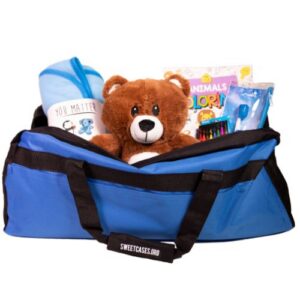
Our Sweet Case program complements this law by providing high-quality duffle bags filled with essentials such as clothing, toiletries, and comfort items. These bags support children entering foster care, waiting for court decisions, or moving toward adoption or guardianship.
Sweet Case helps foster parents and agencies meet children’s needs immediately, without delay, while reinforcing that every child matters.
A Small Change With a Lasting Impact
When children are removed from their homes, their belongings may be the only connection to their past. Carrying those items in a trash bag can damage self-esteem and increase emotional distress.
Providing proper luggage sends a different message—one of care, respect, and belonging. This law ensures children remain at the center of the foster care system and reminds them they are worthy of dignity, stability, and hope.
Help us connect you with the right member of our team by sharing the basics of your brand or foundation.
"*" indicates required fields
ALLIES
PARTNERSHIP INCLUDES
Opportunity For Activation Of ‘Ally Level’ Sponsorship During One Special Event Or Campaign: Foster Care Awareness Month (May), Back to School (Aug/Sep), Disney Days (May & Sept), Giving Tuesday (Nov)
Live Check Presentation With Foster Love Representative
Custom Impact Reports
Press Release & Video Announcing Partnership
Social Media Post Highlighting Partnership
Table At Foster Love Gala
Featured As ‘Ally Level’ Sponsor On Foster Love Website & Annual Report
Opportunity For Activation Of ‘Champion Level’ Sponsorship During One Special Event Or Campaign: Foster Care Awareness Month (May), Back to School (Aug/Sep), Disney Days (May & Sept), Giving Tuesday (Nov)
Co-branded Video Of Live Check Presentation And Interview of ‘Champion Level’ Brand Representative
Custom Impact Reports
Press Release & Video Announcing Partnership
Social Media Post Highlighting Partnership On Foster Love Social Media Channels
2nd Partnership Video Emphasizing Impact Of Partnership
Table At Foster Love Gala
Featured As ‘Champion Level’ Sponsor On Foster Love Website & Annual Report
Opportunity For Activation Of ‘Superhero Level’ Sponsorship During One Special Event Or Campaign: Foster Care Awareness Month (May), Back to School (Aug/Sep), Disney Days (May & Sept), Giving Tuesday (Nov)
Co-branded Video Of Live Check Presentation And Interview of ‘Superhero Level’ Brand Representative
Custom Impact Reports
Press Release & Video Announcing Partnership
Social Media Post Highlighting Partnership On Foster Love Social Media Channels
2nd Partnership Video Emphasizing Impact Of Partnership
Table At Foster Love Gala
Featured As ‘Superhero Level’ Sponsor On Foster Love Website & Annual Report